




What Are the Advantages of LPG?
Although it is less preferred compared to other fuels, LPG offers numerous advantages. When the necessary equipment is installed in gasoline and diesel vehicles, they can easily be converted to LPG. The carbon emission values are lower compared to gasoline. As a result, it can be considered a more environmentally friendly fuel option. Additionally, it has a lower fuel cost.
Are More Practical and Environmentally Friendly Options Possible?
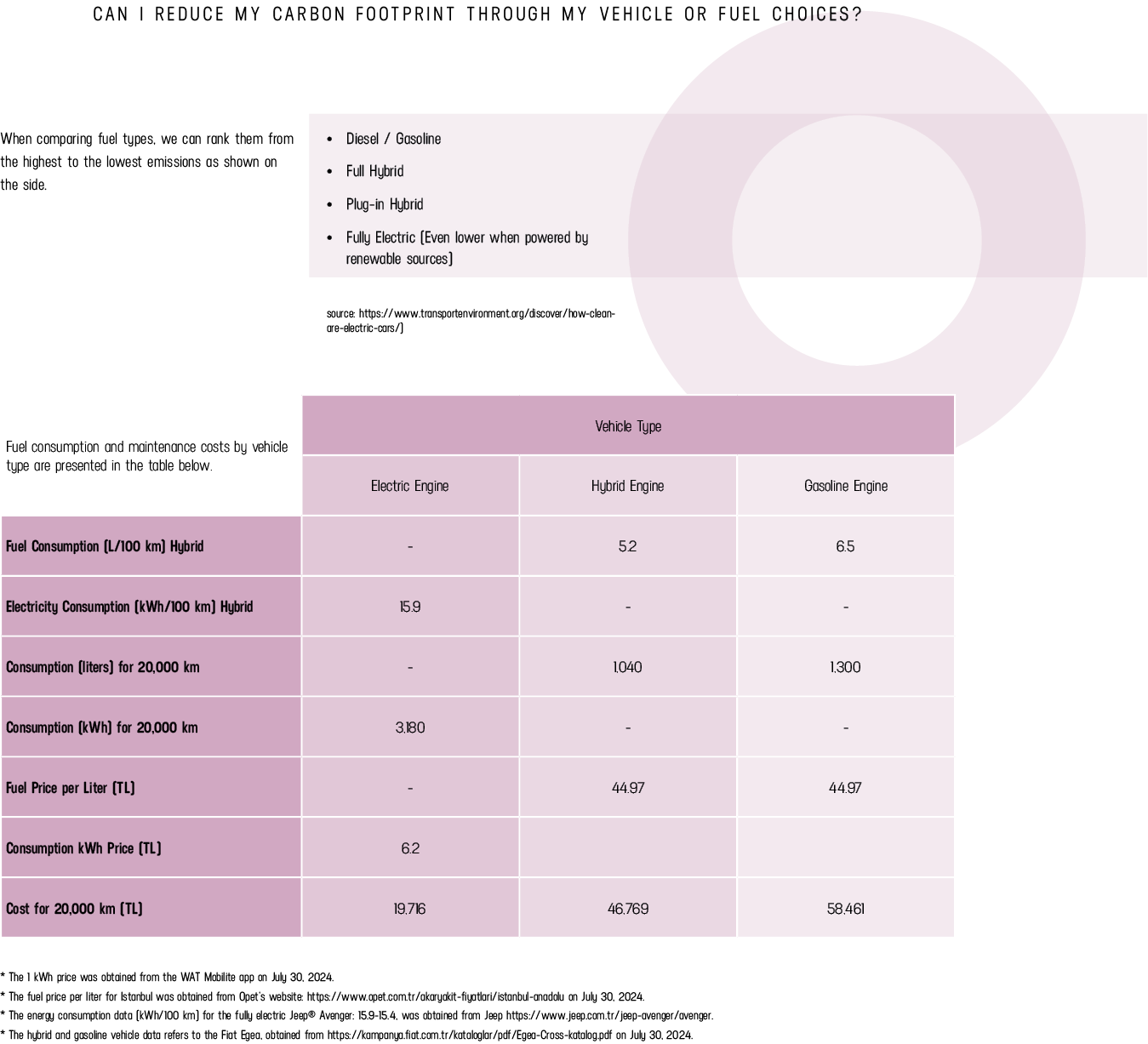
Hybrid vehicles, also known as “mild hybrids,” feature a working method that combines the advantages of both electric and conventional motors. During most of the drive, the electric motor’s power is utilized, while the gasoline engine is activated when needed to maximize efficiency. This approach minimizes the environmental impact of fossil fuels while eliminating the disadvantages related to the range and charging times of electric vehicles.
In hybrid vehicles, only the electric motor is used during acceleration and at low speeds. This working principle minimizes carbon emissions, especially in stop-and-go traffic where fuel consumption tends to be higher.
In addition to their environmental benefits, hybrid vehicles operate with technology that meets the additional needs of drivers. For instance, the power generated by the gasoline engine allows the electric motor to recharge itself, offering mobility freedom and fuel savings without facing range limitations. Additionally, the regenerative braking system stores the energy released when braking into the battery.
Electric Vehicles
Electric vehicles do not have an internal combustion engine and use electricity as fuel, which results in lower fuel and maintenance costs compared to other vehicles.
When the electricity used to power electric vehicles is sourced from renewable energy, carbon emissions can be eliminated. Electricity generated from fossil fuels contributes to carbon emissions during the production phase.
To reduce greenhouse gas emissions, it is crucial to use low-emission sources for electricity generation instead of fossil fuels.
What are some other innovative methods to reduce my carbon footprint?
There are some innovative methods emerging in the field of mobility. For example:
The benefit of autonomous vehicles is achieved by reducing fuel consumption and preventing traffic congestion based on driver behavior. Autonomous vehicles can communicate with other vehicles to optimize traffic flow and reduce congestion. Factors such as driving speed, acceleration, and braking of autonomous vehicles can help optimize fuel consumption.
In addition, carbon emissions can be reduced by 5% to 15% through the use of navigation. With navigation, drivers can choose less congested routes, thus reducing the time spent in traffic.
On the other hand, applications such as smart traffic and parking management can reduce traffic congestion and minimize parking time, leading to a reduction in carbon footprint by up to 30%.
In short, the environmental benefits of connected next-generation vehicles, which are equipped with internet connectivity and enable communication between vehicles through a central system, are achieved through increased fuel efficiency and reduced emissions. Since connected vehicles can monitor driver behavior, they can detect and prevent fuel-consuming actions such as excessive acceleration and sudden braking. Reducing behaviors that increase fuel consumption can lead to a reduction in emissions by approximately 10-15%.
WHAT ELSE CAN I DO TO FIGHT CLIMATE CHANGE?
- Installing heat insulation in our homes will be beneficial both economically and environmentally in the long run.
- In winter, you can heat your home a little less. Even reducing the radiator setting by just 1°C can reduce energy consumption by approximately 5-10%.
- You can opt for a fan instead of an air conditioner.
- You can reduce your consumption of red meat.
- Prefer products produced in Türkiye, especially food.
- Try to reduce the amount of waste you generate.
- When you’re outdoors, you should dispose of your trash in trash bins or, if recyclable, in packaging waste collection bins.
- Electric appliances should not be left on standby; they should be completely turned off when not in use.
- Avoid using hot water unless necessary.
- If possible, you should subscribe to a green energy company that generates electricity from renewable sources.
- To save energy and water, run the washing machine and dishwasher as fully loaded as possible.
- Only boil as much water as you need in appliances like electric kettles.
- Opt for energy-efficient LED bulbs.
- Give up consumption habits that you realize are unnecessary.
 Previous